
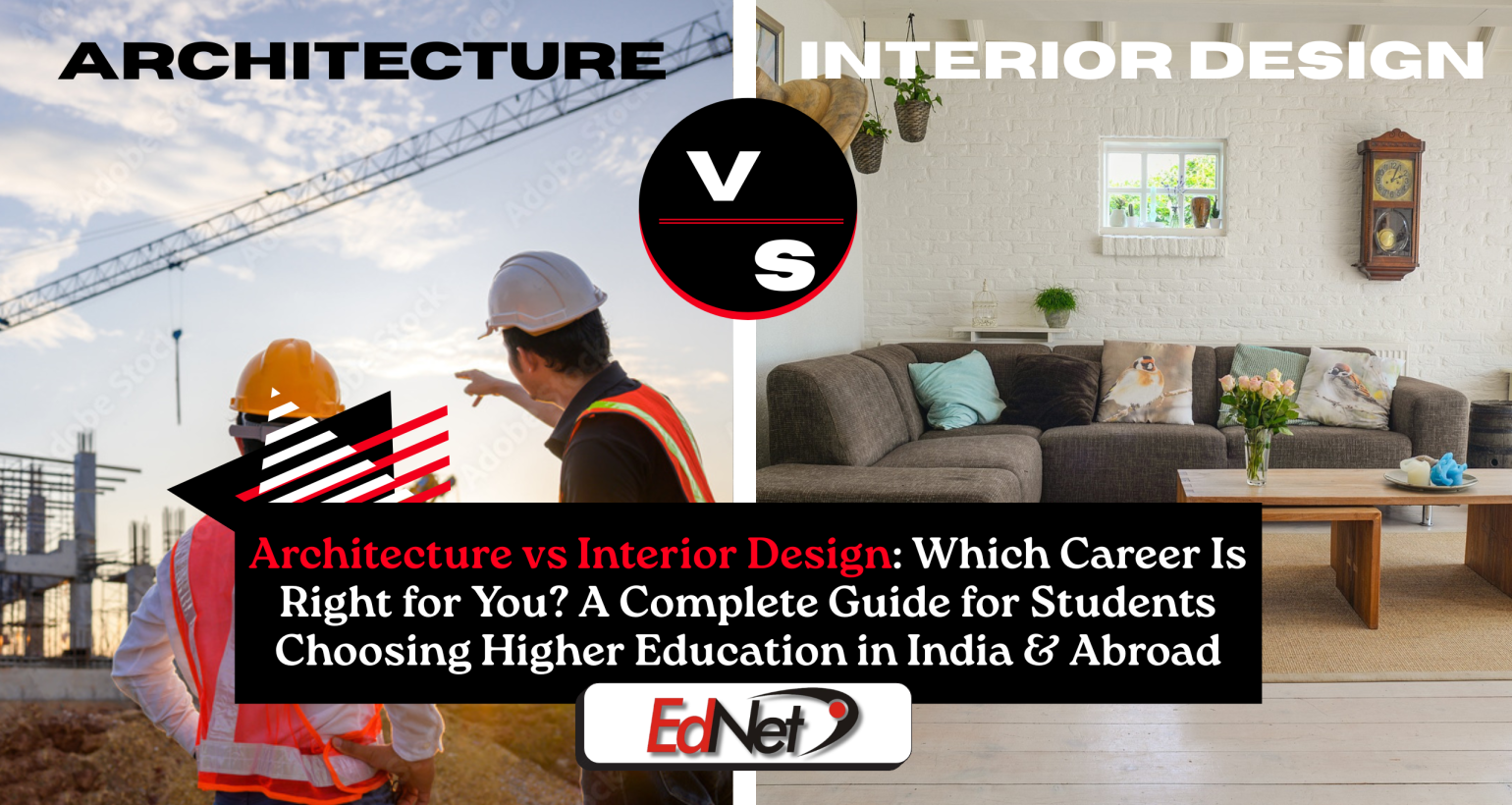
Choosing a career in design can be exciting, but it can also feel overwhelming. Two of the most popular options among creative students are Architecture and Interior Design. While both involve designing spaces and improving the way people experience the built environment, they differ significantly in their focus, skill sets, career opportunities, and educational pathways.
Many students assume that Interior Design is simply a smaller version of Architecture or that both careers lead to similar jobs. In reality, they are distinct professions with different responsibilities and ways of thinking. If you are exploring higher education in India or planning to study abroad, understanding these differences will help you choose a course that matches your interests, strengths, and long-term career goals.
What Is Architecture?
Architecture is the art and science of designing buildings and the spaces around them. Architects consider how a building looks, functions, and performs while ensuring it is structurally sound, safe, sustainable, and compliant with regulations.
An architect’s work begins long before construction starts. They research the site, develop concepts, prepare technical drawings, coordinate with engineers and consultants, and oversee the design throughout the project. Architecture combines creativity with technical knowledge, making it an ideal career for students who enjoy both design and problem-solving.
What Is Interior Design?
Interior Design focuses on the spaces within buildings and how people experience them. Interior designers create environments that are functional, comfortable, aesthetically pleasing, and suited to the needs of the people using them.
Their work involves space planning, lighting, furniture, materials, colour palettes, finishes, custom detailing, and user experience. Interior designers also consider accessibility, sustainability, ergonomics, and the emotional impact of a space. Rather than designing the building itself, they transform interiors into spaces that improve everyday living and working.
Architecture vs Interior Design: What Is the Difference?
Although the two disciplines often collaborate on the same projects, their roles begin at different stages. Architecture focuses on creating the building itself. Architects determine its form, structure, layout, circulation, and relationship with the surrounding environment.
Interior Design begins once the architectural framework is in place. Designers shape how people experience the spaces inside by carefully planning layouts, selecting materials, designing furniture, integrating lighting, and creating environments that reflect both function and identity. Simply put, architects design the building. Interior designers design the experience within it.
Which Course Is More Creative?
Both careers require creativity, but they express it differently. Architecture combines creative thinking with mathematics, engineering principles, environmental considerations, and technical problem-solving. Students spend significant time developing design concepts while also learning structural systems, construction methods, and building technologies.
Interior Design places greater emphasis on human behaviour, aesthetics, materials, styling, colour, furniture, and spatial experiences. Students explore how thoughtful design can influence the way people feel, work, learn, and interact.
If you enjoy balancing artistic ideas with technical challenges, Architecture may suit you. If you are fascinated by interiors, materials, furniture, lighting, and user experience, Interior Design could be a better fit.
Skills You Need to Succeed
Successful architecture students are typically curious about cities, buildings, sustainability, engineering, history, and design. They enjoy solving elaborate problems, thinking analytically, and visualising ideas in three dimensions.
Interior Design students often have a strong interest in creativity, storytelling, colour, textures, materials, furniture, spatial planning, and how people interact with spaces. They enjoy experimenting with concepts while paying close attention to detail.
Both fields require communication skills, collaboration, time management, and a willingness to revise ideas in response to feedback.
Career Opportunities
Architecture graduates may work in architectural practices, urban planning firms, construction companies, heritage conservation, landscape design, sustainable design, or real estate development. Some later specialise in areas such as computational design, urban design, conservation, or environmental planning.
Interior Design graduates build careers in residential, commercial, hospitality, retail, exhibition, healthcare, workplace, and luxury interior design. Others specialise in furniture design, set design, visual merchandising, lighting design, or experiential spaces.
As technology continues to evolve, professionals in both fields increasingly work with digital modelling, visualisation, sustainable design, and interdisciplinary teams.
Should You Study Architecture or Interior Design Abroad?
Many universities abroad offer outstanding programmes in both Architecture and Interior Design, giving students access to world-class studios, industry collaborations, research opportunities, and global perspectives.
However, choosing a university should involve much more than rankings. Students should evaluate the curriculum, studio culture, faculty expertise, facilities, internships, industry exposure, accreditation, and career outcomes. The right programme is the one that aligns with your interests, aspirations, and preferred learning style.
How to Decide Which Career Is Right for You
Before selecting a course, ask yourself what excites you most. Do you enjoy imagining entire buildings, exploring structural ideas, and solving large-scale design challenges? Or are you more interested in transforming interiors, creating memorable experiences, and designing spaces that people use every day?
Speaking with experienced education counsellors, attending design workshops, developing a portfolio, and exploring real projects can help you better understand which discipline matches your strengths. The earlier students begin exploring these fields, the more confidently they can prepare for university applications, portfolio development, and future careers.
Final Thoughts
Architecture and Interior Design are both rewarding careers that combine creativity with problem-solving. Neither is better than the other. The right choice depends on your interests, personality, strengths, and long-term goals. Choosing a course should never be about following trends or assumptions. It should be about finding the discipline that inspires you to learn, create, and grow. With the right guidance, thoughtful planning, and a strong portfolio, students can pursue exciting opportunities at leading universities in India and around the world.
Frequently Asked Questions (FAQs)
What is the difference between Architecture and Interior Design?
Architecture focuses on designing buildings and their structural systems, while Interior Design focuses on planning and enhancing the spaces inside buildings to improve functionality, comfort, and user experience.
Which is better: Architecture or Interior Design?
Neither is inherently better. Architecture suits students interested in buildings, construction, and technical design, while Interior Design is ideal for those passionate about interiors, materials, furniture, and spatial experiences.
Do Architecture and Interior Design require different portfolios?
Yes. Although both require creative portfolios, Architecture portfolios often emphasise observation, problem-solving, sketches, models, and conceptual thinking. Interior Design portfolios may include space planning, interiors, furniture concepts, materials, colour exploration, and visual storytelling.
Can Interior Designers become Architects?
In most countries, becoming an architect requires completing an accredited Architecture programme and meeting professional licensing requirements. An Interior Design degree alone does not qualify someone to practise as an architect.
Is studying Architecture or Interior Design abroad worth it?
For many students, studying abroad provides access to global design perspectives, advanced facilities, industry collaborations, and international career opportunities. The best choice depends on individual goals, preferred universities, and career aspirations.
People Also Ask (PAAs)
Which career has better scope: Architecture or Interior Design?
Both fields offer excellent opportunities. Career prospects depend on specialisation, skills, experience, portfolio quality, and industry demand rather than the discipline alone.
Which course is harder: Architecture or Interior Design?
Architecture generally involves more technical subjects, structural studies, and longer studio hours. Interior Design also requires intensive studio work but focuses more on interiors, user experience, materials, and spatial design.
Can I study Architecture or Interior Design abroad after Class 12?
Yes. Many universities across the UK, USA, Canada, Australia, Singapore, Europe, and other destinations offer undergraduate programmes for students completing Class 12, although portfolio and admission requirements vary.
How important is a portfolio for Architecture and Interior Design admissions?
A portfolio is often one of the most important parts of the application. It demonstrates creativity, observation, design thinking, and the ability to communicate ideas visually.
Explore Design Education with EdNet Consultants
Choosing between Architecture and Interior Design is a significant decision, and every student’s journey is unique. At EdNet Consultants, we help students explore design careers, identify universities that align with their goals, build competitive portfolios, and navigate the application process to leading institutions in India and abroad.
Whether you are just beginning to explore design or preparing your university applications, informed guidance can help you make confident decisions about your future.