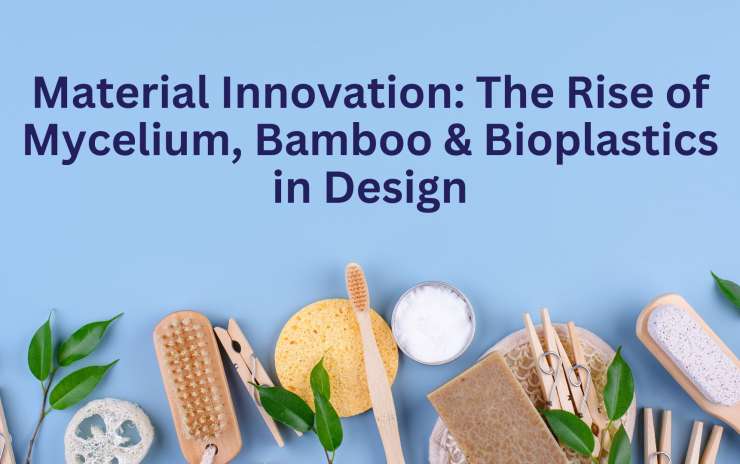
The design industry is undergoing a revolutionary shift towards sustainability, with the adoption of biodegradable and regenerative materials reshaping product and interior design. Mycelium, bamboo, and bio-plastics are at the forefront of this movement, offering innovative solutions that align with environmental goals. Mycelium: From Fungi to Functional Design Mycelium, the root structure of fungi, is gaining recognition for its potential in sustainable design. Researchers at IIT Madras have developed biodegradable packaging materials using agricultural waste and mycelium composites, demonstrating superior mechanical strength compared…
Wearable technology is no longer confined to fitness trackers or smartwatches. The fashion industry has embraced innovation like never before, giving rise to smart fabrics, self-cleaning textiles, and garments that respond to environmental stimuli. This fusion of fashion and function is ushering in a new era, where aesthetics meets performance and style merges with science. With rising consumer demand for convenience, sustainability, and personalization, wearable tech is poised to revolutionize not only how we dress but how we live. Smart Fabrics: Fashion That…
In today’s highly competitive world, it’s easy for students to become consumed by academics, chasing grades, preparing for exams, and building resumes that seem to speak only in percentages and accolades. But education, in its truest sense, is not just about what is taught within the four walls of a classroom. It is about exposure, expression, and exploration, and creative competitions offer exactly that. One of the most enriching ways for young individuals to broaden their horizons is by participating in activities that…
How Indian Handloom is Transforming Contemporary Fashion: A Sustainable Blend of Tradition and Style
In 2025, Indian handloom is not merely a relic of the past. It is a living, breathing force shaping the contemporary fashion landscape. Designers are reimagining traditional textiles, blending age-old weaving techniques with modern aesthetics to create pieces that appeal to today’s consumers. This fusion not only preserves India’s rich textile heritage but also supports the artisans who have been the custodians of these crafts for generations. The Resurgence of Handloom in Modern Fashion The global fashion industry is witnessing a shift towards…
Interior design is more than just creating beautiful spaces. It is about telling a story. For Indian students aspiring to become designers, understanding how to weave cultural heritage, traditions, and narratives into contemporary interiors is essential. By integrating elements from the past with modern aesthetics, designers can craft spaces that are both visually stunning and deeply meaningful. Why Cultural Storytelling Matters in Interior Design Cultural storytelling allows designers to celebrate traditions, preserve history, and create spaces that reflect personal and collective identities. In…
The world of art and design is ever evolving and two contrasting movements, Minimalism and Maximalism, have significantly shaped contemporary aesthetics. While Minimalism emphasizes simplicity and restraint, Maximalism celebrates abundance and complexity. Understanding the origins, characteristics, and the impact of these styles on modern design can provide valuable insights for artists, designers, and enthusiasts alike. Understanding Minimalism: The Art of Less Minimalism emerged in the late 1950s as a reaction against the emotional intensity of Abstract Expressionism. Artists like Donald Judd and Agnes…
From bustling metropolises to emerging urban neighborhoods, public art, especially murals and installations, has emerged as a powerful tool for urban transformation, cultural expression, and community engagement. Far more than visual enhancements, these large-scale artworks have redefined how we interact with public spaces, shaping narratives, identities, and social dynamics. In 2025, cities around the globe are investing in public art not just for its beauty but for its measurable impact on tourism, economic revitalization, social cohesion, and cultural storytelling. What is Public Art…
In the ever-evolving landscape of art, a major revolution is underway. Artists are increasingly transitioning from traditional mediums to digital platforms, leveraging blockchain technology and Non-Fungible Tokens (NFTs) to create, sell, and authenticate their work. This shift is not merely a trend but a significant evolution in the art world, redefining concepts of ownership, provenance, and value. The Digital Art Revolution Digital art has been gaining momentum over the past few decades, propelled by advancements in technology and the proliferation of digital tools.…
In today’s fast-paced, technology-driven world, many of us spend the majority of our time indoors, be it at home, in the office, or in commercial spaces. However, as humans, we have an innate connection to nature, and research shows that incorporating natural elements into indoor spaces can significantly enhance our well-being. This concept, known as biophilic design, focuses on integrating nature into built environments to improve mental health, productivity, and sustainability. What Is Biophilic Design? The term biophilic originates from the word biophilia,…