
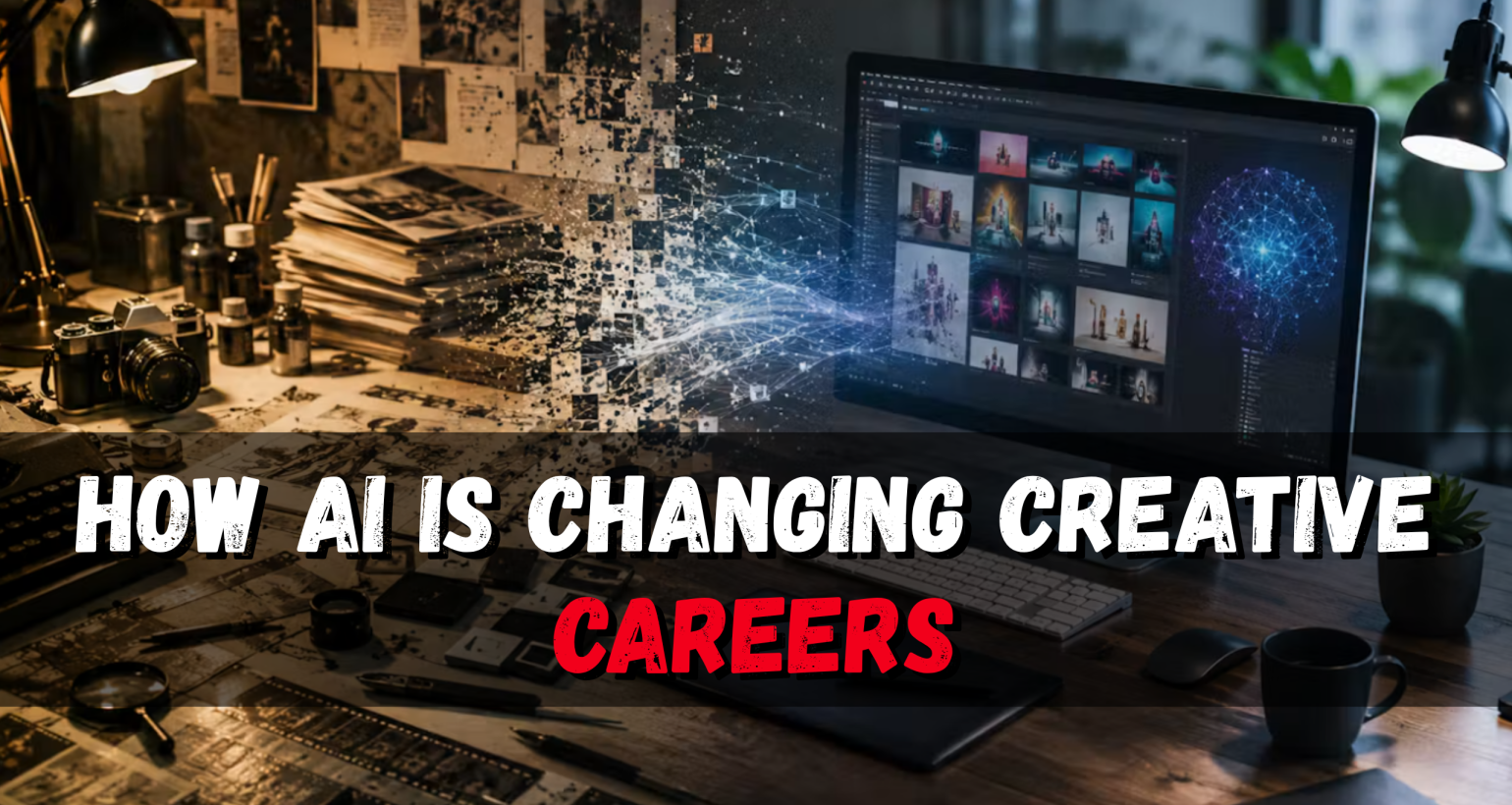
How AI Is Changing Creative Careers: What Art and Design Students Should Know
Imagine spending hours sketching ideas for a fashion collection, only to discover that an AI tool can generate dozens of visual variations in minutes. Or picture an animator using AI to explore different backgrounds before deciding how a scene should look. These tools are no longer distant possibilities. They are becoming part of everyday creative work.
For students considering a future in art and design, this shift raises important questions. Will artists and designers still be needed? Which creative skills will employers value? And how should students prepare for an industry that is changing so quickly?
AI is changing creative careers, but it is not making creativity irrelevant. It is influencing how ideas are developed, how projects are completed, and what clients expect from creative professionals. Understanding these changes can help aspiring designers use technology without losing sight of the skills that make their work original.
How Is AI Changing the Creative Process?
Before a designer produces a final piece, there is research, brainstorming, sketching, testing, and revision. AI is changing how some of these stages work.
A graphic designer developing a brand identity can use generative AI to explore different visual directions before creating the final design. A fashion student can experiment with colour combinations and silhouettes, while an animator can generate visual references to help plan a scene.
The biggest advantage is speed. AI design tools can produce starting points and variations quickly, giving designers more time to explore promising concepts and refine their work.
However, a generated image is rarely a finished solution. It may not match the brief, communicate the intended message, or meet a project’s practical requirements. Designers still need to evaluate the results, make adjustments, and decide whether an idea actually solves the problem. AI can help produce options, but deciding which option works requires creative judgement.
Will AI Replace Artists and Designers?
If AI can generate illustrations, suggest layouts and produce visual concepts, what will be left for a designer to do?
The key distinction is that creating an image and solving a creative problem are not the same.
Consider a company preparing to launch a new product. AI might generate several packaging concepts, but someone still needs to understand the brand, identify its target customers and decide how the packaging should communicate the product’s value. A design that looks attractive may not appeal to the intended audience or work on a retail shelf.
The same applies across creative fields. A fashion designer must consider the wearer, an animator the emotions of a scene, and an interior designer how people will use a space.
As AI takes on more production tasks, creative professionals may spend more time developing concepts, directing projects, and solving problems. Their responsibilities will change, but people who can guide creative work and make informed decisions will remain important.
Why Are Clients Expecting More from Designers?
AI is also changing what clients expect from creative professionals. When a tool can generate several visual concepts in minutes, clients may begin to expect more options, quicker presentations, and faster revisions. A graphic designer working on an advertising campaign, for example, might be asked to present several creative directions before a client settles on one. A fashion brand may want its team to explore more prints, colours and silhouettes within the same timeline.
But more options do not necessarily mean better work. Endless revisions can also make it difficult to maintain a clear creative direction.
Designers must understand the brief, explain their decisions, respond to feedback and recognise when a proposed direction does not serve the project. They may use AI-generated variations to begin a discussion with a client, then adapt the selected idea after considering the budget, audience and production constraints.
This is where communication, collaboration, and negotiation matter. Technology can make possibilities visible sooner, but people still need to agree on the purpose and decide which solution is workable.
How Different Creative Fields Are Using AI
AI applications vary across creative industries, depending on the tools, skills, and practical demands of each field.
Fashion Design
Fashion designers can use AI to explore patterns, colours, silhouettes and collection concepts. It can help them experiment with visual directions before developing a finished design.
However, a striking digital image does not automatically translate into a successful garment. Designers still need to understand fabrics, garment construction, fit, comfort, and how clothing moves on the body. A collection must work beyond the screen.
Animation and Game Design
AI can help animation and game design teams develop visual references, explore environments, and experiment with character and background concepts. In game development, AI-assisted systems can also contribute to more responsive characters and interactive experiences.
Yet character development, storytelling, visual consistency, and emotional impact remain central to memorable games and films. Technology can support the production process, but creative teams still shape the experience they want audiences to have.
Graphic and Communication Design
From advertising campaigns to brand identities, graphic designers can use AI to explore layouts, generate visual references and test different ways of communicating a message.
The challenge is making all these elements work together. A brand needs a recognisable identity, so designers must consider how typography, colour, imagery and messaging connect with its audience. A collection of attractive visuals is not enough if it fails to communicate the right message.
Architecture and Interior Design
Architects and interior designers can use AI-assisted visualisation to experiment with layouts, lighting, materials and spatial arrangements before presenting a proposal.
However, a beautiful visualisation is only one part of designing a space. The final design must also account for safety, accessibility, structural requirements, material limitations and the needs of the people who will use it.
Will Originality Become More Important?
When almost anyone can generate an attractive image using an AI tool, what makes one creative project stand out?
Originality often lies in the thinking behind the work. Personal experiences, cultural influences, and everyday observations give a designer’s work a point of view beyond appearance.
Imagine two students receiving the same brief to design a poster about identity. One might draw inspiration from family photographs and cultural traditions, while another might explore language, migration or personal memories. Their outcomes could look completely different because they approach the subject from different perspectives.
AI can help students experiment with visual styles, but their ideas still need to come from their own observations and experiences. Sketchbooks, independent projects, photography and visits to exhibitions can help them develop a recognisable creative voice.
In an industry where generating images is becoming easier, the ability to develop an original idea and communicate it clearly may become an even more valuable skill.
The Challenges Creative Professionals Need to Understand
The growing use of AI in creative industries also brings challenges that students and professionals should understand.
Changing entry-level opportunities: Some routine production tasks may become automated. This could affect certain entry-level roles, particularly those involving repetitive visual work. Students may therefore need to develop skills beyond operating design software and producing finished assets.
Copyright and ownership: AI-generated content can raise questions about the use of existing artwork, consent, attribution, and how artists are compensated. The legal position can vary depending on the content, platform, and jurisdiction, so creative professionals need to understand the terms of the tools they use.
Data privacy: Uploading client briefs, unpublished designs or confidential material to an AI platform may create privacy concerns. Professionals should check how a tool handles uploaded information before using it for commercial work.
Bias and representation: AI-generated images can reproduce stereotypes or misrepresent communities, particularly when the systems behind them reflect limited or biased data. Creative professionals need to review outputs carefully and consider who is represented and how.
Responsible AI use involves checking the source and suitability of material, protecting confidential information, and reviewing generated content for accuracy and potential harm.
How Should Students Prepare for Creative Careers in the Age of AI?
AI does not make traditional creative education less important. A strong foundation in art and design may be more valuable than ever.
Drawing, colour theory, composition, visual communication, design principles, and material exploration help students understand why a design works, not just how to produce it. These skills also make it easier to recognise when an AI-generated result needs improvement.
Students should become familiar with tools used in their chosen fields, from AI-assisted visualisation and digital illustration to generative design and interactive media. They do not need to master every new platform. Understanding how relevant tools fit into a creative process is a more useful starting point.
One practical exercise is to approach the same brief in two ways. Students can first develop a concept using traditional methods, then experiment with AI-assisted tools. Comparing the results can reveal where technology saves time, where it introduces new possibilities, and where personal judgement makes the difference.
Most importantly, students should continue making independent work. Personal projects and exposure to different art forms help them develop their interests, experiment with unfamiliar ideas, and build confidence in their own creative decisions.
The Future of Creative Careers
As creative tools evolve, some tasks will become faster, responsibilities will change and new roles may emerge. The exact impact will vary across industries, but the ability to adapt will matter.
For students, the goal should not be to compete with AI to produce images or complete tasks faster. It should be to develop the creative judgement, technical understanding, and individual perspective needed to use new tools thoughtfully.
Strong creative professionals will know when AI can help and when a project needs another approach. Students who combine creative thinking with technological understanding will be better prepared for an industry that is still taking shape.
Frequently Asked Questions (FAQs)
- Do students need prior experience with AI to study art and design?
No. Most creative degrees focus on foundational skills such as drawing, composition, visual communication, and design thinking. Students can build familiarity with AI tools as part of their education, alongside learning the principles of their chosen discipline.
- Which AI skills are useful for aspiring designers?
Students can benefit from learning how to write effective prompts, evaluate generated results, refine visual outputs, and incorporate AI-assisted work into a larger project. Understanding the limitations of these tools is just as important as knowing how to use them.
- Should students include AI-generated work in their creative portfolios?
They can include AI-assisted projects, provided the portfolio clearly demonstrates their own creative contribution. Students should explain how they developed the idea, used the technology, refined the output, and made decisions throughout the process. They should also check the portfolio requirements of the institutions to which they are applying.
- Can relying too much on AI affect a student’s creative development?
It can. Relying on generated outputs without practising foundational skills may limit opportunities to develop independent thinking, technical ability, and problem-solving. Students should use AI to explore ideas while continuing to create work through their own methods.
- How can creative professionals use AI responsibly?
They should check the terms of the tools they use, consider copyright and ownership concerns, protect confidential information, and review generated content for bias or misrepresentation. Human oversight remains important, particularly when creative work is intended for public or commercial use.
People Also Ask (PAAs)
What are some popular AI tools used in creative industries?
Tools such as Adobe Firefly, Midjourney, DALL·E and Runway support tasks ranging from image generation and editing to video production and visual experimentation. The most useful option depends on the creative discipline, the project and the platform’s terms of use.
Can AI-generated designs be used commercially?
This depends on the platform’s licensing terms, the content involved, and applicable copyright laws. Before using generated work in advertising, branding, or other commercial projects, professionals should review the tool’s terms and check for potential rights or ownership issues.
Will AI affect entry-level jobs in the creative industry?
Some entry-level roles involving repetitive production tasks may change as businesses adopt AI-assisted workflows. Employers will still need people who can understand briefs, contribute ideas, collaborate with creative teams, and make informed decisions. Students should develop both technical and conceptual skills.
How is AI being used in video and film production?
AI can support storyboarding, visual effects, image generation, video editing, background creation, and pre-production visualisation. Filmmakers and production teams still guide the narrative, artistic direction, performances and final creative decisions.
Can AI create a complete fashion collection or design project?
AI can generate concepts, patterns, colour combinations and visual representations of a collection. Turning these ideas into finished products still requires decisions about materials, construction, fit, functionality and production.
Building Creative Skills for an AI-Driven Future
At EdNet School of Art & Design (ESAD), we believe that a strong creative foundation begins with exploration, experimentation, and the confidence to develop original ideas. As technology changes the art and design industry, students need opportunities to build their artistic skills, understand design principles, and explore new ways of working.
Our approach encourages students to look beyond software and techniques, develop their individual creative voices and understand how their interests can translate into future academic and professional opportunities.
AI may change the tools designers use, but the ability to observe, imagine, question, and create will always remain at the heart of art and design. Not sure where to begin or how to prepare for a creative career? Reach out to us for guidance and information.