
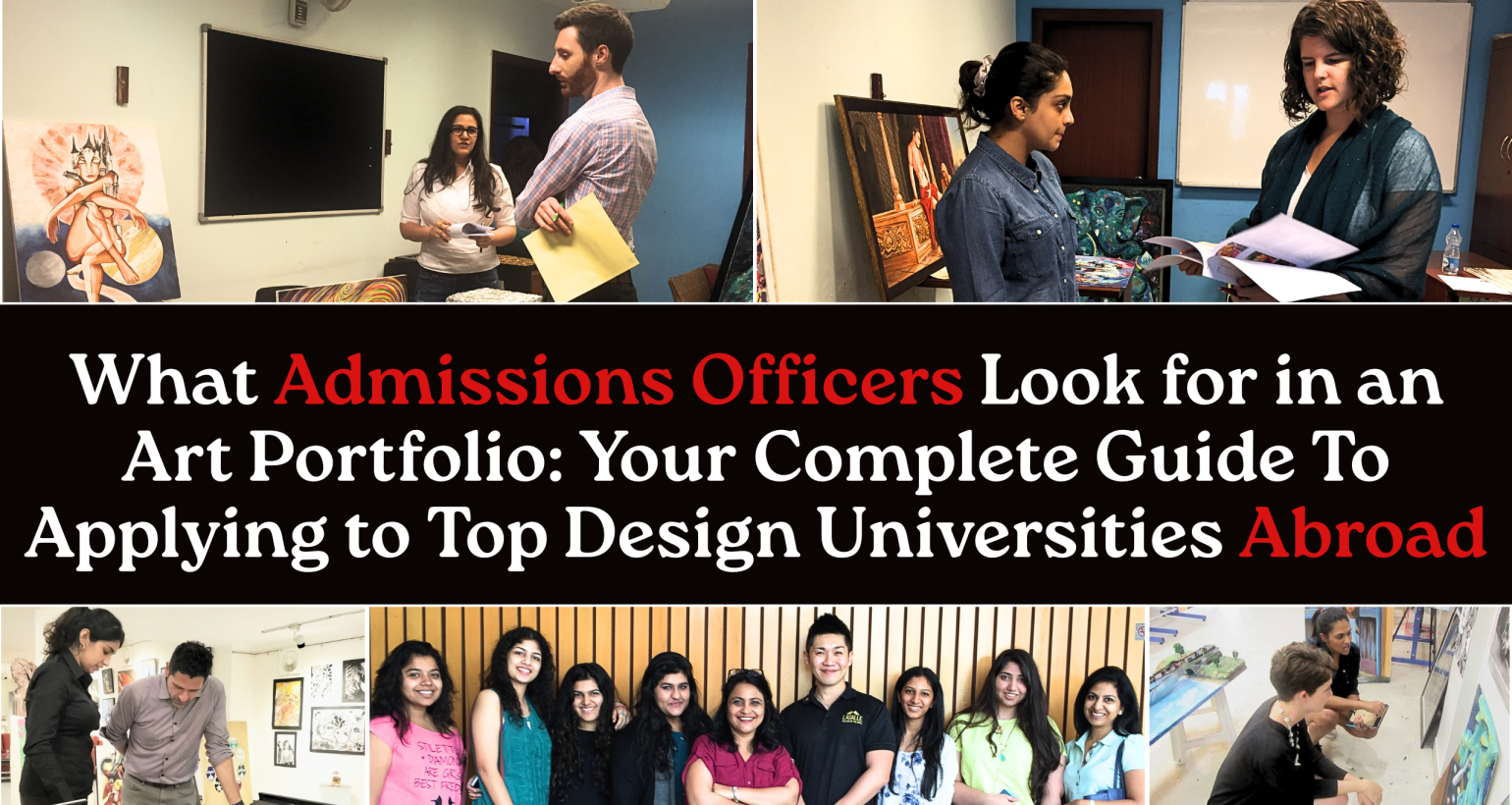
If you are planning to study art, design, architecture, animation, fashion, or any other creative discipline abroad, your portfolio will often matter just as much, if not more, than your grades. Whether you are applying to universities in the UK, USA, Canada, Europe, or Australia, admissions officers are not simply looking for beautiful artwork. They are looking for potential.
One of the biggest misconceptions among students is that an art portfolio is a collection of their best drawings or paintings. In reality, it is a carefully curated reflection of how you think, observe, experiment, solve problems, and grow as a creative individual. So, what exactly do admissions officers look for in an art portfolio? Let us explore.
They Want to See Your Creative Thinking, Not Just Technical Skill
Many students assume that a portfolio should only showcase polished final pieces. While strong craftsmanship certainly matters, admissions officers are often far more interested in understanding how you arrived at the final outcome. Sketches, concept development, mood boards, iterations, experimentation with materials, and visual research reveal your creative process.
These pieces demonstrate curiosity, critical thinking, and your willingness to refine ideas, qualities that universities value immensely. A technically perfect drawing without any evidence of exploration may not leave the same impression as a project that clearly demonstrates thoughtful development.
Originality Always Stands Out
Admissions officers review hundreds, sometimes thousands, of portfolios every admission cycle. They quickly recognise work that follows trends or closely imitates artists found on social media. Instead of trying to create what you think universities want to see, focus on creating work that genuinely reflects your interests, experiences, and perspective. Personal projects often become the strongest part of an application because they reveal authenticity. Universities are not looking for the next copy of an existing artist—they are looking for someone who brings a unique voice to the creative community.
Process Is Often More Important Than the Final Outcome
Creative education is built around experimentation. Admissions officers appreciate students who are willing to take risks, make mistakes, and improve through iteration. Showing multiple versions of a project, explaining why certain ideas worked or failed, and documenting your creative journey demonstrates maturity as a learner. Your portfolio should tell the story behind each project rather than simply presenting the finished result.
Show Breadth Without Losing Focus
A strong portfolio demonstrates versatility while maintaining a clear creative identity. For example, students may include observational drawing, digital illustration, photography, sculpture, mixed media, typography, product design, or animation. However, every piece should contribute to an overall narrative about your interests and abilities.
Quality always outweighs quantity. Fifteen thoughtful projects will leave a stronger impression than thirty unrelated pieces.
Observation Matters More Than Imagination Alone
One quality that many leading art and design universities consistently value is observational ability. Drawing from life helps demonstrate your understanding of proportion, form, light, shadow, texture, and spatial awareness. Everyday objects, people, architecture, and urban environments often reveal stronger artistic foundations than work created solely from imagination or copied references. Observation shows admissions officers that you can truly see before you create.
Experimentation Demonstrates Growth
Creative students rarely work in just one medium. Admissions officers enjoy seeing applicants experiment with charcoal, ink, acrylics, collage, ceramics, textiles, photography, digital software, printmaking, and three-dimensional materials. Experimentation illustrates adaptability and intellectual curiosity, two qualities essential to success in creative education.
Your Portfolio Should Tell a Story
Every portfolio should feel that it has been created with intention. Rather than presenting unrelated artwork, organise your projects so that they reflect your creative journey. Think about how one project connects to the next, what themes repeatedly appear in your work, and how your interests have evolved over time. A portfolio with a clear narrative is often more memorable than one containing technically stronger but disconnected pieces.
Context Makes Your Work Stronger
Admissions officers appreciate understanding the thinking behind your projects. Brief descriptions explaining the inspiration, objective, challenges, materials, or creative decisions can significantly strengthen your portfolio. These explanations help reviewers understand not only what you created but also why you created it. Keep the writing concise and focused on your creative process.
Tailor Your Portfolio to the Course
One portfolio does not fit every university or programme. A portfolio for Fashion Design should differ from one prepared for Architecture, Product Design, Illustration, Fine Art, or Animation. Researching each university’s portfolio requirements allows you to highlight the projects that best align with that course. Customising your portfolio demonstrates genuine interest and careful preparation.
Consistency and Presentation Matter
Presentation plays an important supporting role. Ensure that images are high quality, colours are accurate, layouts are clean, and projects are organised logically. Avoid overcrowding pages or adding unnecessary graphic elements that distract from the work itself. The presentation should enhance your artwork, not compete with it.
Final Thoughts
An exceptional portfolio is not built overnight. It develops through observation, experimentation, reflection, and consistent practice over time. Admissions officers are not searching for perfection. They are looking for students who are creative, willing to learn, and capable of thinking independently.
Your portfolio should demonstrate not only what you have already achieved but also the potential you have to grow within their programme. If your portfolio tells an authentic story about who you are as a creative thinker, it has already accomplished its most important purpose.
Frequently Asked Questions (FAQs)
How important is an art portfolio for studying abroad?
For most art, design, fashion, architecture, animation, and creative programmes, the portfolio is one of the most important parts of the application. It often carries more weight than grades because it showcases your creativity, problem-solving ability, and artistic potential.
How many pieces should an art portfolio include?
Most universities recommend 10-20 carefully selected projects. However, quality is always more important than quantity.
Do universities prefer digital or traditional artwork?
Most universities welcome both. A balanced portfolio that demonstrates versatility across different mediums is often viewed positively.
Should sketchbook work be included?
Yes. Sketchbooks provide valuable insight into your creative process, research, experimentation, and idea development, making them an important part of many successful portfolios.
Can beginners create a strong portfolio?
Absolutely. Admissions officers evaluate potential, curiosity, and willingness to learn—not just professional-level technical ability.
People Also Ask (PAAs)
What do admissions officers look for in an art portfolio?
Admissions officers look for originality, creative thinking, technical ability, experimentation, observational skills, and evidence of a strong creative process rather than only polished final artwork.
What should you avoid in an art portfolio?
Avoid copying existing artists, including too many similar projects, submitting unfinished work without context, poor-quality photographs, weak presentation, and portfolios that lack a clear narrative or creative process.
How can I make my art portfolio stand out?
Focus on authentic projects, demonstrate experimentation, include sketches and development work, explain your creative decisions, and tailor your portfolio to the university and course you are applying for.
Do top art universities prefer process or finished work?
Most leading universities value both, but many place greater emphasis on process because it reveals how you think, solve problems, and develop ideas throughout a project.
When should students start building an art portfolio?
Ideally, students should begin developing their portfolio at least 12 to 18 months before applying. Starting early allows time for experimentation, skill development, and creating a cohesive body of work.